INTERNATIONAL MARKET REPORT
03/30/2026
ISRAEL
MARKET PULSE
(SOURCE: WSTFA)
Feedback from the Trade on Their Plans and Interest in the USA Pear Season:
Interest in U.S. pears remained strong in Israel throughout March, driven by limited domestic and European supply and ahead of incoming shipments from Argentina. By February, the U.S. pear tariff-free quota of 1,164 tons had already been fully utilized, meaning the 2026 quota was exhausted early. Despite solid demand, importers reported slower retail sales, highlighting the need for additional marketing support. It is also worth noting that once the tariff-free quota is exhausted, imports continue under regular duties, which results in additional payments and can further slow down trade activity. Some delays in container arrivals were noted, with deliveries pushed to late March. Overall fruit quality has been consistent; however, ripening has been slower than usual, likely due to MCP treatment. The season is now approaching its conclusion.
Expectations for Any Freight or Logistics Challenges:
Despite the very difficult situation in the region, container operations at Israeli ports continue. Major shipping lines are gradually restoring their routes, but newly introduced war‑risk surcharges often reaching 4,000 dollars or more per 40ft reefer container, are significantly increasing the cost of imported goods
Opportunities in Your Market for Specific Varieties, Sizes, and Grades:
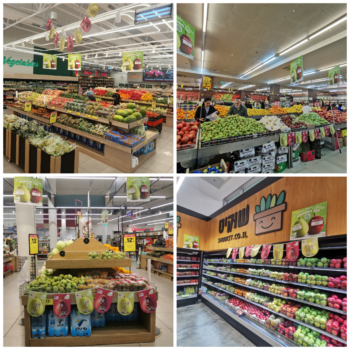
Although green pears from different origins are often sold at similar prices, US Anjou pears typically look better due to their shape and larger size. This advantage becomes more pronounced late in the season, when the quality of local pears declines and European volumes drop. In addition, competing Green Anjou pears from Argentina have not yet appeared on the shelves in March, as the country continues to struggle with high production costs. Red Anjou retains strong prospects as the only red‑pear variety currently available on the market.
Update on the Competition in the Market:
The pear market remained stable throughout March despite challenging conditions. Prices showed minimal week‑to‑week movement—generally within a narrow band of −1% to +3%—across both wholesale and retail segments. The presence of Greek pears has declined to a minimum, while increased arrivals from the United States have made US pears noticeably more prominent on store shelves. Green pears from Israel, Greece, and the US are often sold at similar price levels. In contrast, the red pear segment is dominated by the US Red Anjou, which faces no direct competition and therefore maintains a higher price point.
Political or Economic Issues Impacting Imports, Retail, or Consumer Behavior:
Following a global fertilizer shortage, fertilizer prices in Israel have risen by 180%, while packaging‑material costs and plastic are up by as much as 35%. Combined with more expensive sea freight, these factors are expected to lift fresh‑produce and food prices in the near term. Fertilizers account for roughly 10% of agricultural production costs, and rising plastic prices affect both consumer packaging and essential farm inputs such as greenhouse film and irrigation components. Israel has arranged alternative supply routes from Eastern Europe, Egypt, and the Balkans, and some fertilizers are produced domestically. However, the country remains largely dependent on imported components and this is happening just ahead of the planting and fertilization season, which runs from April to October.
Other Brief Comments:
According to media reports, the current escalation has triggered a major shift in Israeli consumer habits. Instead of visiting malls, markets and cafés, households have redirected a significant share of their spending online. Companies with strong e‑commerce logistics are reporting revenue growth despite the unstable environment. Experience shows that this shift toward online purchasing is likely to persist, including in the fresh produce segment
USA PEARS: RETAIL PRICING, SIZES, AND GRADES
-
US1: 100%
-
Fancy: %
-
3rd Grade: %
COMPETITION: RETAIL PRICING AND SIZES
UPCOMING ACTIVITIES