INTERNATIONAL MARKET REPORT
01/29/2026
MEXICO
MARKET PULSE
(SOURCE: WSTFA)
Feedback from the Trade on Their Plans and Interest in the USA Pear Season:
During January, importers and wholesalers reported good USA Pear sales. Price offered at origin was attractive and steady, which has helped to maintain prices offered at wholesale. In addition, quality was excellent and this has motivated customers to keep purchasing Northwest pears. Another important factor to consider has been that apple prices - both domestic and imported - have been higher, which makes customers prefer to buy imported pears instead of apples. Importers expect that volumes will continue increasing, but also commented that they are a little worried about the volumes that remain at origin. Their concern is that if volumes do not increase in the upcoming months, they expect large pear volumes by the end of the season which could represent a risk to sell pears with lower quality and higher prices.
Expectations for Any Freight or Logistics Challenges:
At this point, freight or logistic challenges in Mexico are not expected in February. By mid-January, farmers from five states announced road closures if the government did not comply with their stipulations - expected to happen in the next two weeks after January 19th; however, this did not take place.
Opportunities in Your Market for Specific Varieties, Sizes, and Grades:
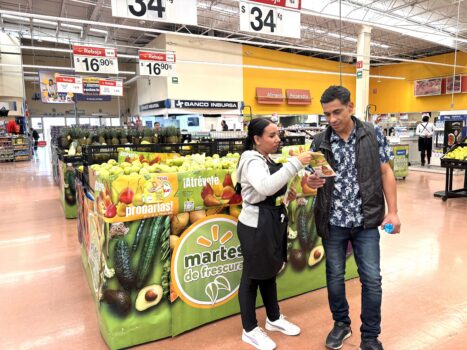
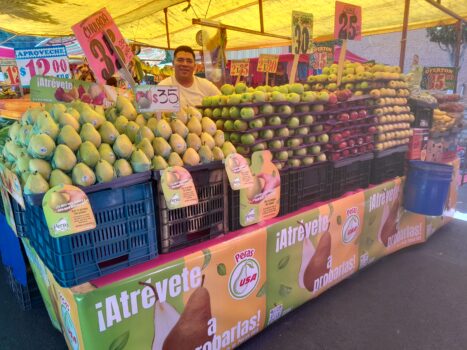
Green Anjou continues being the most preferred variety for wholesalers, supermarket stores and traditional channels. This season, sizes have not been a problem, as retailers (modern and traditional) have been able to handle from 60 to 150. The good quality and price have motivated them to continue purchasing several sizes. Other varieties like Bosc, Red Anjou and others were also requested, but in lower volumes. There is also a niche market for other varieties like Forelle, Starkrimson and Comice.
Update on the Competition in the Market:
USA Pears reported 97% pear market share at wholesale level, 93% at supermarket stores and 98% at traditional channels; sales and quality were reported as excellent. Pears from California were still available at supermarkets with 2% pear market share. Quality was reported as fair; pears were overripe which affected shelf life. As a result, sales were low, and this origin is not expected to be available for the next period. Pears from China were available at wholesale, representing 3% pear market share, with 5% at supermarkets and 2% at traditional channels. Quality was good, but sales were low due to higher price and limited availability.
Political or Economic Issues Impacting Imports, Retail, or Consumer Behavior:
During the first half of January 2026, headline inflation in Mexico increased by 0.31% on a biweekly basis, reaching an annual rate of 3.77%, due to the increase in the Special Tax on Production and Services (IEPS). The products that saw the largest price increases were cigarettes (12.22%), bottled soft drinks (3.97%), tomatoes (3.45%), limes (15.21%), and hair care products (1.75%). Other increases occurred in owner-occupied housing (0.18%), small eateries such as lunch counters, fondas, tortas´ shops and taquerías (0.75%), electricity (0.99%), restaurants and similar establishments (0.49%), and domestic services (1.28%). According to data from the National Institute of Statistics and Geography (INEGI), the core inflation component (which excludes goods and services with more volatile prices) posted a biweekly increase of 0.43%, driven by higher prices for merchandise (0.69%) and services (0.19%).
Other Brief Comments:
Chedraui plans to open 147 new stores in Mexico during 2026, in addition to five stores in the United States, bringing the total number of openings for the year to 152 units. With this move, Chedraui expects total sales in the Mexican market to grow between 8% and 9%, consolidating its recovery and strengthening its presence against competitors such as Oxxo, Walmart, and hard discounters.
USA PEARS: RETAIL PRICING, SIZES, AND GRADES
-
US1: 48%
-
Fancy: 20%
-
3rd Grade: 32%
COMPETITION: RETAIL PRICING AND SIZES
UPCOMING ACTIVITIES